
Why Wood is the Best Choice for Decks in Lower Michigan
Updated: May 6
Wood Is Renewable and Environmentally Friendly
One of the biggest advantages of wood is that it’s a renewable resource. Trees can be replanted and grown again, making wood a sustainable choice when harvested responsibly. Unlike synthetic materials, wood breaks down naturally and has a smaller carbon footprint during production.
Using wood for decks supports sustainable forestry practices, which help maintain healthy forests and wildlife habitats. When you choose wood, you’re not just getting a beautiful deck—you’re also making a choice that’s better for the planet.
Wood Decks Can Last a Lifetime with Proper Maintenance
Many people worry that wood decks won’t last long because they can rot or warp. The truth is, when wood is properly maintained, it can last for decades—even a lifetime. Regular cleaning, sealing, and staining protect the wood from moisture, sun damage, and pests.
For example, cedar and redwood are naturally resistant to decay and insects, making them excellent choices for decks. Pressure-treated pine is another popular option that’s treated to resist rot and insects. With the right care, these woods can stay strong and beautiful for years.

Preparing Wood Posts to Resist Rot
A common concern with wood decks is the durability of the posts, especially those set in the ground. If not prepared correctly, wood posts can absorb moisture and start to rot. But there are proven ways to protect them.
Before setting posts in the ground, it’s important to:
Use pressure-treated wood designed for ground contact.
Apply a protective sealant or wood preservative to the part of the post that will be underground (We use a creosote tar mix).
Set posts on concrete footings or use metal post anchors to keep wood off the soil.
Ensure proper drainage around the post to avoid standing water. We do this by filling the post hole with pea gravel to allow for drainage.
These steps greatly increase the lifespan of wood posts and keep your deck stable and safe.
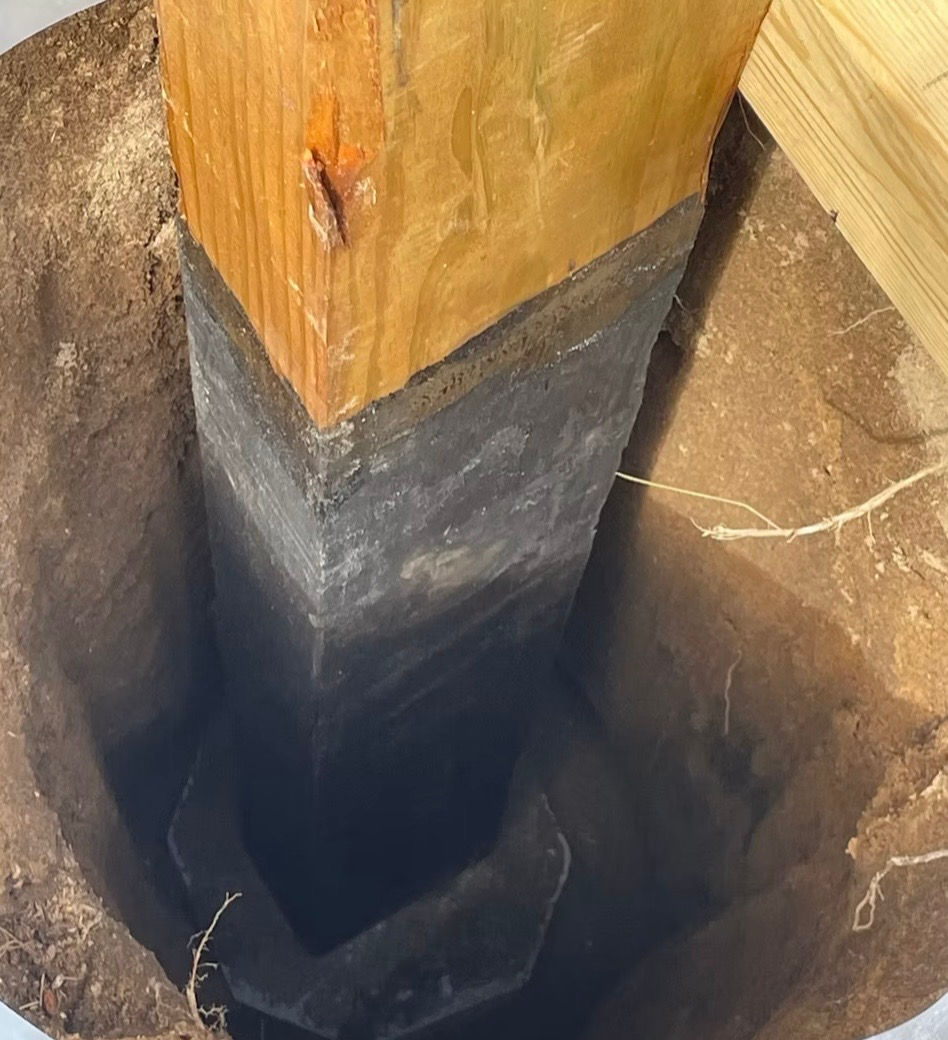
Creosote with tar on all surfaces undergound then set on a concrete foundation.
Wood Decks Offer Better Return on Investment
According to the 2024 Cost vs. Value Report by Zonda, wood decks offer a higher return on investment (ROI) compared to composite decks. Composite decks yield an average ROI of about 68.2%, while traditional wood decks typically offer an ROI closer to 82.9%. That means if you invest in a wood deck, you’re likely to get more value back when you sell your home.
Besides the better ROI, wood decks cost approximately 35-45% less than composite decks. This makes wood a smart choice for homeowners who want a beautiful, durable deck without breaking the bank.
Comparing Wood and Composite Decks
Both wood and composite decks have their pros and cons. Here’s a quick look at how they compare:
| Feature | Wood Decks | Composite Decks |
|-----------------------|----------------------------------|---------------------------------|
| Cost | 35-45% less expensive | More expensive upfront |
| Appearance | Natural, warm, and classic look | Uniform, sometimes artificial |
| Maintenance | Requires regular sealing/staining| Low maintenance, no staining |
| Durability | Can last a lifetime with care | Resistant to rot and insects |
| Environmental Impact | Renewable and biodegradable | Made from plastics and wood fibers|
For many, the natural beauty and lower cost of wood decks outweigh the convenience of composite decks. Plus, with proper care, wood decks can last just as long.
Real-World Example: Built to Last Construction LLC
If you’re in Lower Michigan and thinking about a new deck, I recommend checking out Built to Last Construction LLC. They specialize in high-quality wood decks that are built to last. Their team knows how to prepare wood posts properly and use the best materials to ensure your deck stands strong for years.
Their craftsmanship and attention to detail make them a trusted choice in the area.
Tips for Maintaining Your Wood Deck
To keep your wood deck looking great and lasting long, here are some simple tips:
Clean your deck at least once a year to remove dirt and debris.
Apply a water-repellent sealant every 2-3 years.
Inspect for loose boards, nails, or screws and fix them promptly.
Trim nearby plants to reduce moisture buildup.
Avoid placing heavy furniture or grills directly on the wood without protection.
Following these steps will help your deck stay safe and beautiful through all seasons.
Why I Recommend Wood for Decks in Lower Michigan
Lower Michigan’s climate can be tough on decks. We get cold winters, hot summers, and plenty of moisture. Wood decks, when built and maintained properly, handle these conditions well. The natural wood expands and contracts with temperature changes, and pressure-treated wood resists moisture and insects.
Plus, wood decks offer a timeless look that fits perfectly with Michigan’s outdoor style.
Final Thoughts on Choosing Wood for Your Deck
Wood decks combine beauty, value, and sustainability. They cost less upfront, offer a higher return on investment, and with the right care, can last a lifetime. Preparing wood posts properly is key to preventing rot and ensuring your deck stays strong.
If you want a deck that feels natural, looks great, and stands the test of time, wood is the way to go. For expert help, consider working with a trusted local contractor like Built to Last Construction LLC who knows how to build decks that last in Lower Michigan.
Ready to build your dream deck? Start with wood, and enjoy a space that’s built to last.
Additional Considerations for Deck Building
Choosing the Right Type of Wood
When selecting wood for your deck, consider the type of wood that best suits your needs. Different woods have unique characteristics. For instance, pressure-treated pine is affordable and widely available, while cedar and redwood offer natural resistance to decay. Each type has its benefits, so think about what’s most important for your project.
Deck Design Ideas
Your deck can be more than just a flat surface. Consider adding features like built-in seating, planters, or even a pergola for shade. These elements can enhance your outdoor experience and make your deck a more inviting space for gatherings.
Local Regulations and Permits
Before starting your deck project, check local building codes and regulations. You may need a permit for your deck, especially if it’s elevated or attached to your home. Understanding these requirements can save you time and headaches down the road.
Budgeting for Your Deck
While wood decks are generally more affordable than composite options, it’s essential to budget for your project. Consider not just the cost of materials but also labor, permits, and maintenance. Having a clear budget helps ensure your project stays on track.
Disclaimer: This post is for informational purposes only and does not replace professional advice. Always consult with a qualified contractor for your specific project needs.


Comments